
The largest sportswear manufacturer in the Baltic States needed a faster, more consistent alternative to manual fabric inspection. Agmis designed a computer vision system that integrates directly into the client's existing inspection stations - automating defect detection across the full fabric width at production line speed.
The client is the largest sportswear manufacturer in the Baltic States, with a long production history and an established reputation in the athletic apparel industry. Their commitment to quality and manufacturing innovation made them a strong partner for evaluating computer vision consulting as a path to modernizing fabric quality control - a process that, like most of the textile industry, had relied almost entirely on manual visual inspection.
The textile industry relies heavily on manual visual inspection - a process that is time-consuming, labor-intensive, and prone to human error. For a high-volume sportswear manufacturer, this created a direct conflict between maintaining inspection thoroughness and meeting production throughput targets.
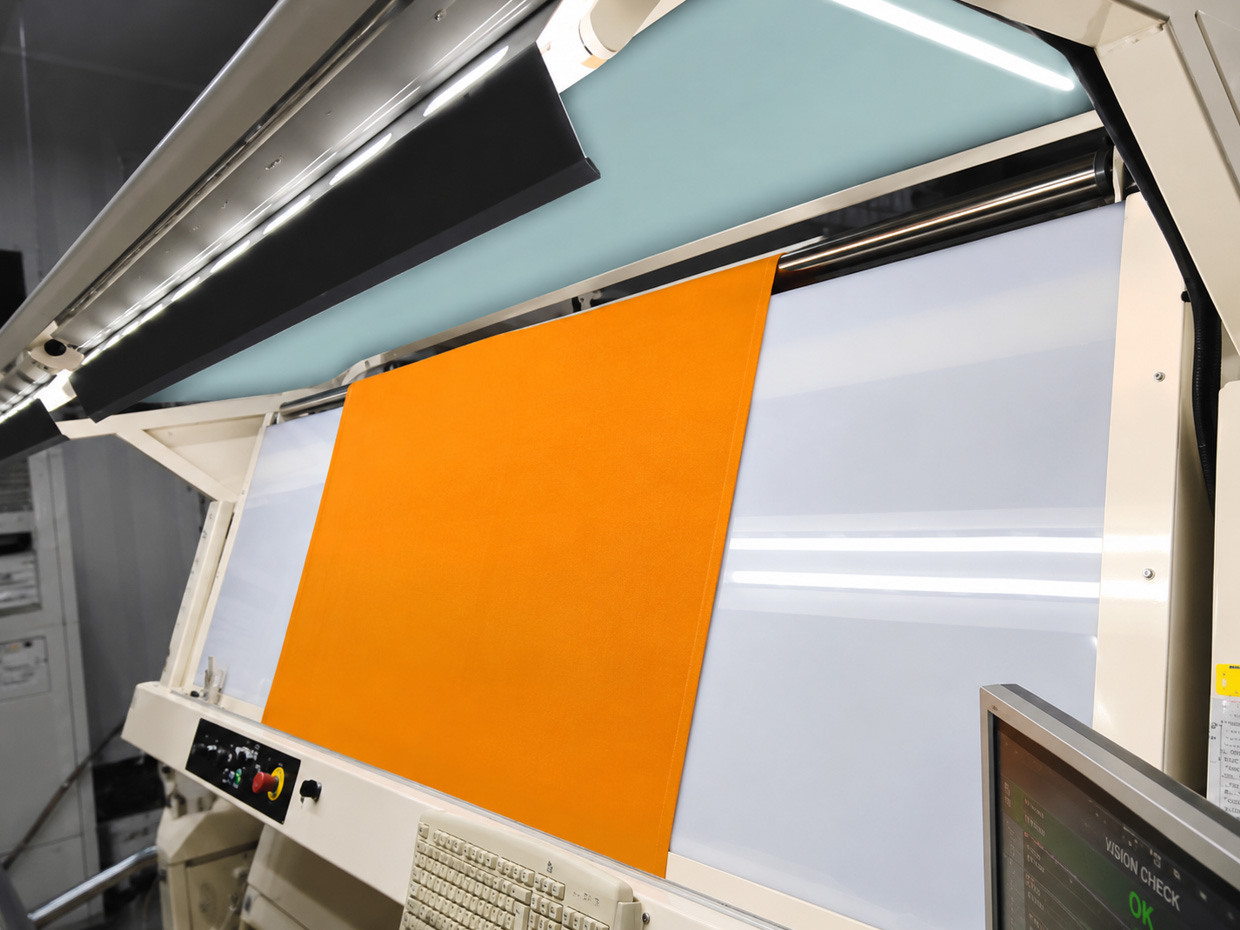
Inspecting fabric visually, meter by meter, is inherently slow. At production volumes typical for the Baltic region's largest sportswear manufacturer, manual review struggled to keep pace without becoming a bottleneck in the production process.
Visual inspection performed by people is subject to fatigue and inconsistency. The same fabric defect can be caught by one inspector and missed by another - or missed by the same inspector later in a long shift.
Maintaining dedicated manual inspection capacity across continuous production lines carries ongoing labor costs. Reducing dependency on manual review - without compromising quality - was a clear commercial priority.
The client needed an automated solution capable of providing flawless and efficient fabric quality inspection - a standard that manual processes, however well-staffed, could not consistently guarantee at scale.
Agmis brought computer vision consulting expertise to design a solution that integrates directly into the client's existing fabric inspection setup - automating the visual inspection process to deliver higher accuracy and speed in defect detection without replacing the inspection stations already in place.
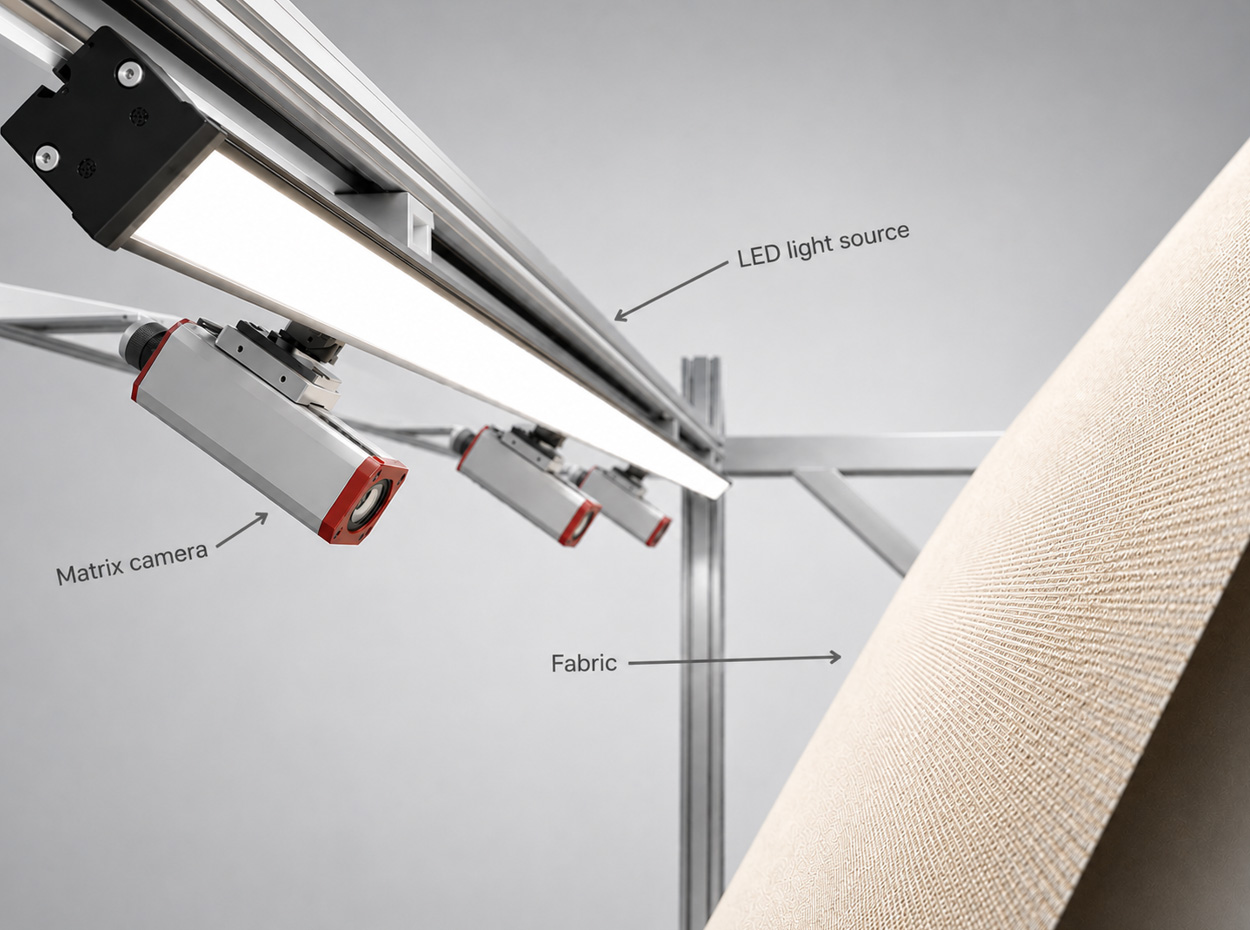
System layout: camera positioning and LED light source placement designed for optimal fabric surface illumination and defect visibility.
Multi-Camera Fabric Observation: Three matrix cameras with global shutter capabilities capture the full fabric width as it moves through the inspection station. Protective enclosures and lenses shield the optics from dust and debris generated in the textile production environment.
Even, Consistent LED Illumination: A specialized LED lighting system provides consistent and even illumination across the fabric surface, ensuring lighting conditions do not interfere with the accuracy of defect detection algorithms.
Defect Detection Algorithms: Advanced algorithms analyze the captured fabric imagery for defects, applying consistent detection criteria across every inspection - removing the variability that comes with human judgment.
Synchronized Real-Time Monitoring: An integrated encoder measures fabric movement to keep image capture synchronized with production speed, while the system collects statistical data on inspection results in real time.
User-Friendly Control Interface: An application interface gives quality control staff direct control over the system and visualization of inspection data - without requiring specialized technical training to operate.
Compatible With Existing Inspection Setups: The system was designed for compatibility with the client's existing fabric inspection stations, avoiding the cost and disruption of a complete infrastructure replacement.
The system is projected to achieve a 99% accuracy rate in defect recognition - a meaningful improvement in consistency over manual inspection, which is subject to fatigue and individual variation.
Automated visual inspection is anticipated to significantly outpace manual review, supporting a substantial boost in production speed without compromising inspection coverage.
By minimizing defects reaching later production stages and reducing dependency on manual labor for inspection, the client can expect meaningful annual cost savings over time.
The system is designed to provide immediate access to statistical defect data and the precise location of defects on the fabric, enabling timely corrective action rather than after-the-fact discovery.
The same computer vision approach used for fabric inspection can be tailored to glass production, where surface defects and quality inconsistencies require similarly precise visual detection.
Pharmaceutical manufacturing presents its own visual inspection demands, and the underlying software architecture is flexible enough to be adapted for quality control requirements in that industry.
Wood product manufacturing - including flooring and panel production - can also benefit from the same defect detection and computer vision foundation developed for textile applications.
Agmis designs computer vision systems for fabric and material quality inspection - built to integrate with the production setup you already have. Let's talk about what's applicable to your operation.
Book a MeetingDesigning an automated visual inspection system means more than building accurate detection algorithms - it means engineering a solution that fits into an active production line without disruption.
Agmis designs systems that work with the inspection stations a manufacturer already has - avoiding the cost and downtime of a full infrastructure replacement.
Camera and lighting components are selected and configured for the realities of a textile production environment - dust, lint, and continuous fabric movement - not laboratory conditions.
From assessing the current inspection process to proposing and designing the technical solution, Agmis brings computer vision consulting expertise across the full project lifecycle.
The same architecture developed for fabric inspection extends to other industries, giving manufacturers confidence that the underlying technology has broader applicability and longevity.
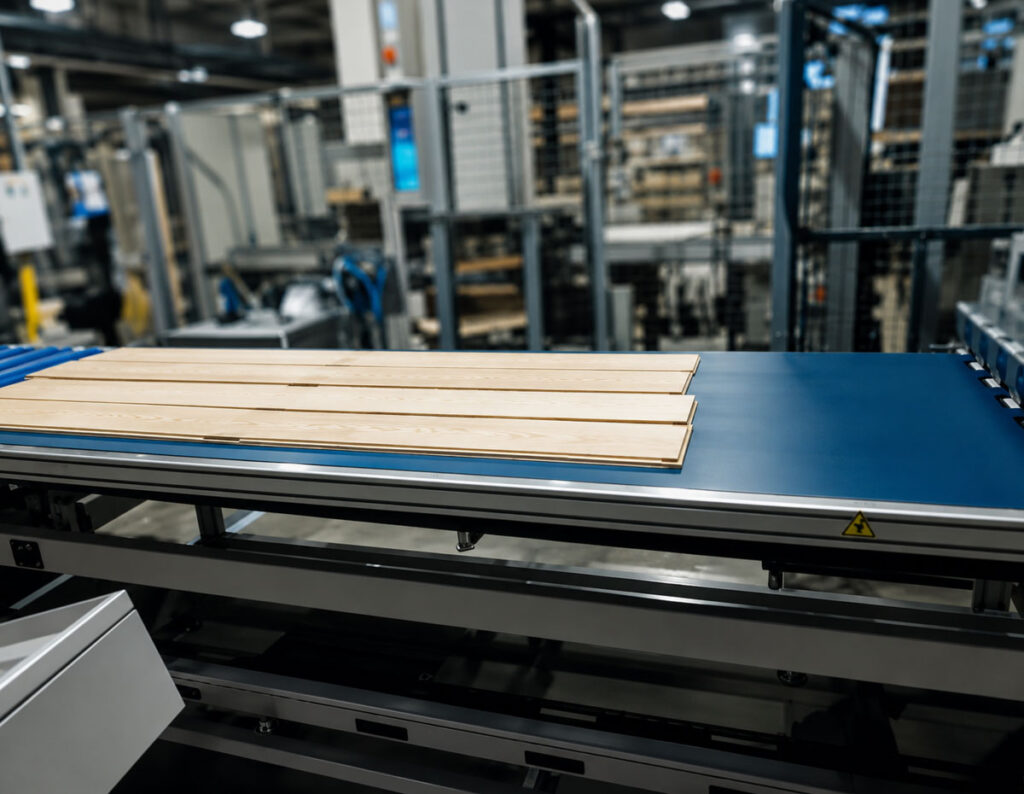 Real-Time Defect Detection
Automated defect detection system for Europe's second-largest hardwood flooring manufacturer, solving quality control problems that manual inspection could not handle at scale.
Read case study →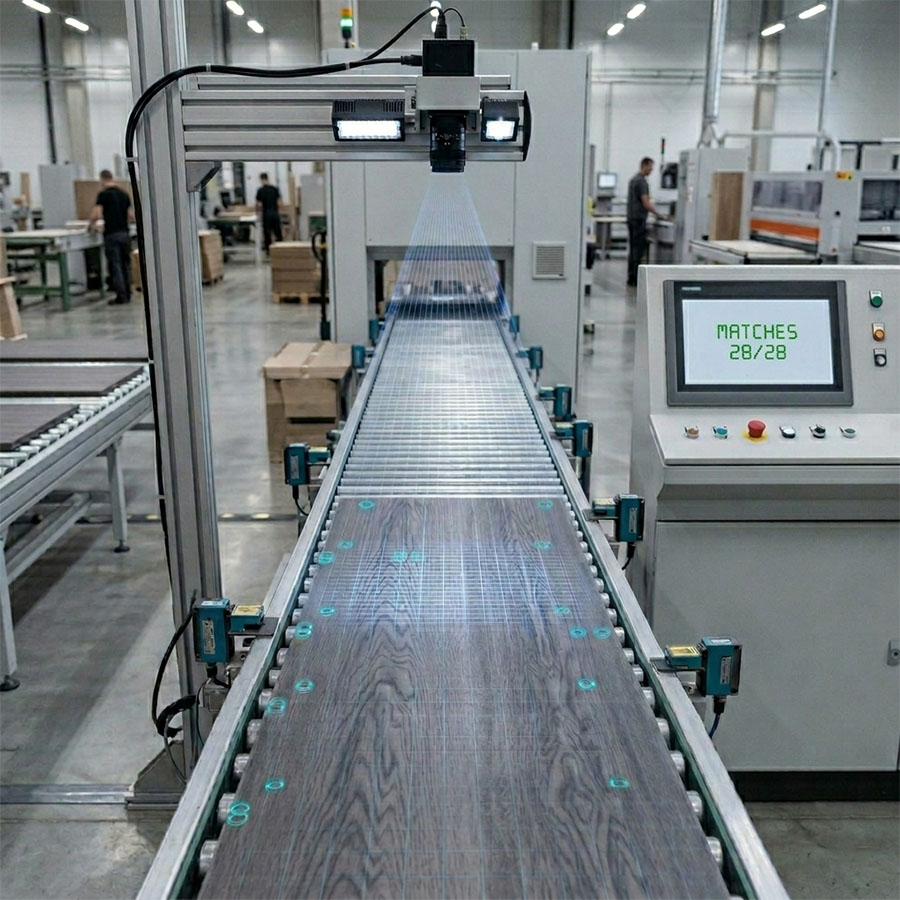 Near-Zero Defect Rate
Developed an automated visual inspection system for furniture manufacturing that scans every board in real-time, detecting defects against CAD specifications.
Read case study → 27× Faster Inspection
Deployed an intelligent defect detection system for a global automotive seat producer, achieving 99% accuracy and inspecting each seat in 2.2 seconds.
Read case study →
Your best inspector misses defects. Not because they’re careless – because they’re human. After four hours on a…
Read article →
Every AI quality control vendor claims 99% accuracy. The problem is they’re all measuring different things. Some measure…
Read article →
That gap – one minute to 2.2 seconds – is the inspection time difference in a deployment we…
Read article →