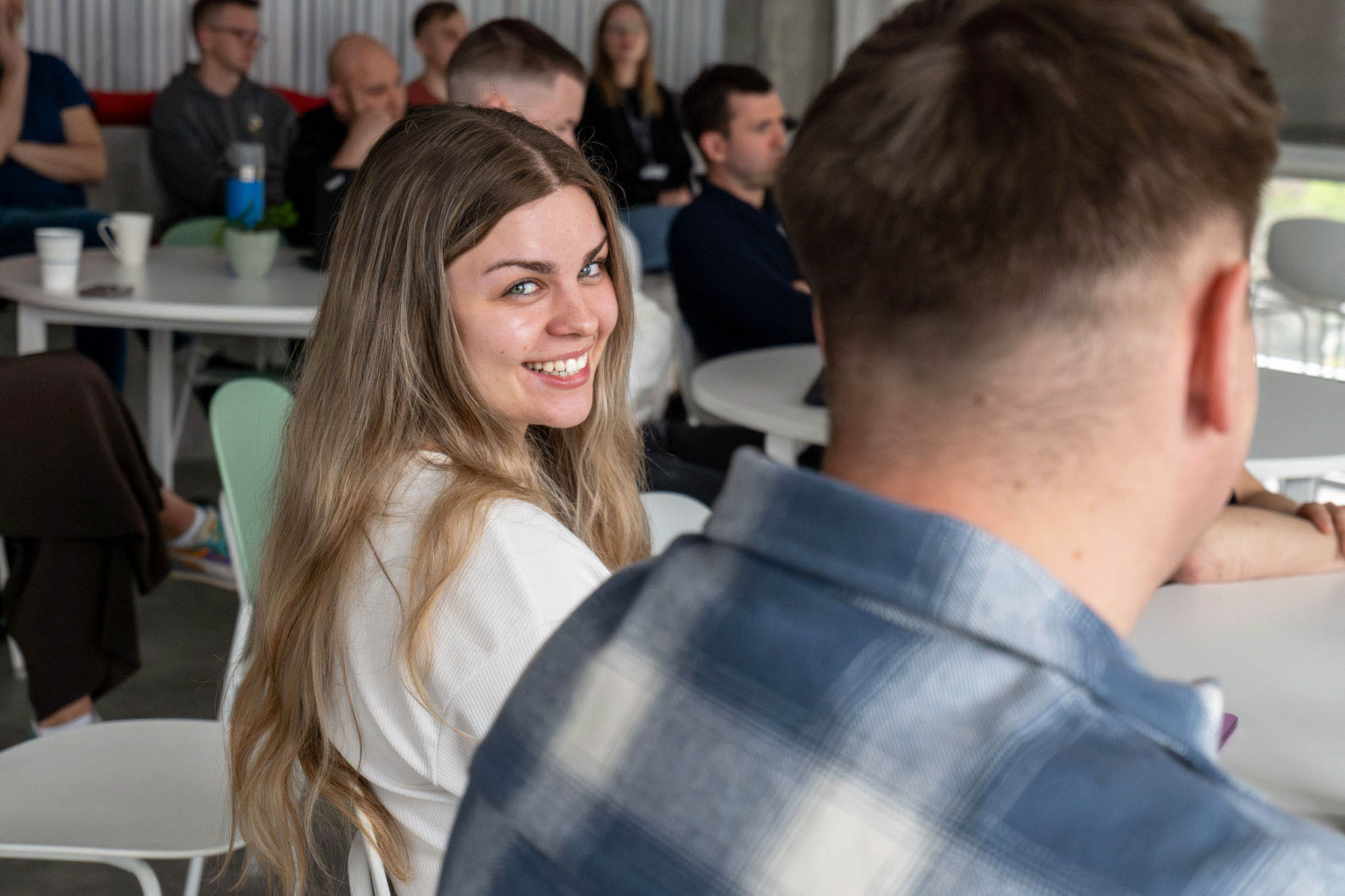
In May 2026, we ran an internal Agmis AI hackathon – a dedicated day for the team to build something of their own, driven entirely by one question: what would you create if you had one free day, an AI tool, and thousands of tokens?
The format was intentionally open. Teams formed around their own ideas – problems spotted in everyday work, repetitive tasks begging to be automated, or creative “what if” experiments that never quite made it onto a project board. There were no strict rules about technology or scope. The goal was to ship something real by end of day and present it to the rest of the company.
Seven teams signed up. Seven ideas made it to the presentation stage. Here is what they built.
The projects
Work Time Tracker
An internally developed replacement for the time-tracking tool most of the team uses daily. The tracker lets you log, import, and export hours without leaving your workflow, built to fit exactly how Agmis projects are structured.
Billing Automation
A legacy support contract and e-invoicing system – built years ago, running on Windows PowerShell, triggered manually – got a full modernisation pass. The team built a web UI, migrated scripts to Bash for Linux deployment, automated invoice delivery via SFTP, added scheduled cleanup, and integrated an AI-powered log monitoring system that reports errors to Slack.
Lark UI
A local UI layer for the Salesforce CLI commands developers run constantly but always forget. Lark UI puts them behind a clean interface – open orgs without logging in, navigate to Setup and scheduled jobs, export and import login files, run Apex scripts – no more mental overhead for routine operations.
AIDE – AI Development Engine
One of our clients is building their own development harness. The AIDE team spent the day going deep into its capabilities and adapting it to real daily development workflows – exploring where AI-assisted tooling can genuinely improve how code gets written and reviewed, not just as a gimmick but as a practical engineering layer.
No-Code Integration + Centrale
Scenarios for one of our own internal products – previously configured manually – got wired into a no-code platform. On top of that, the team built Centrale: a local web application for managing configuration without touching raw settings, giving non-technical users a usable control surface for the first time.
pietAI
Anyone who has been on a team lunch knows the problem: one person pays, nobody has cash, Revolut transfers get delayed. pietAI lives in Slack. You post a photo of the bill; it reads the receipt, works out who owes what, and tells everyone exactly how much to transfer back to whoever picked up the tab. Simple, social, immediately useful.
AI Agency
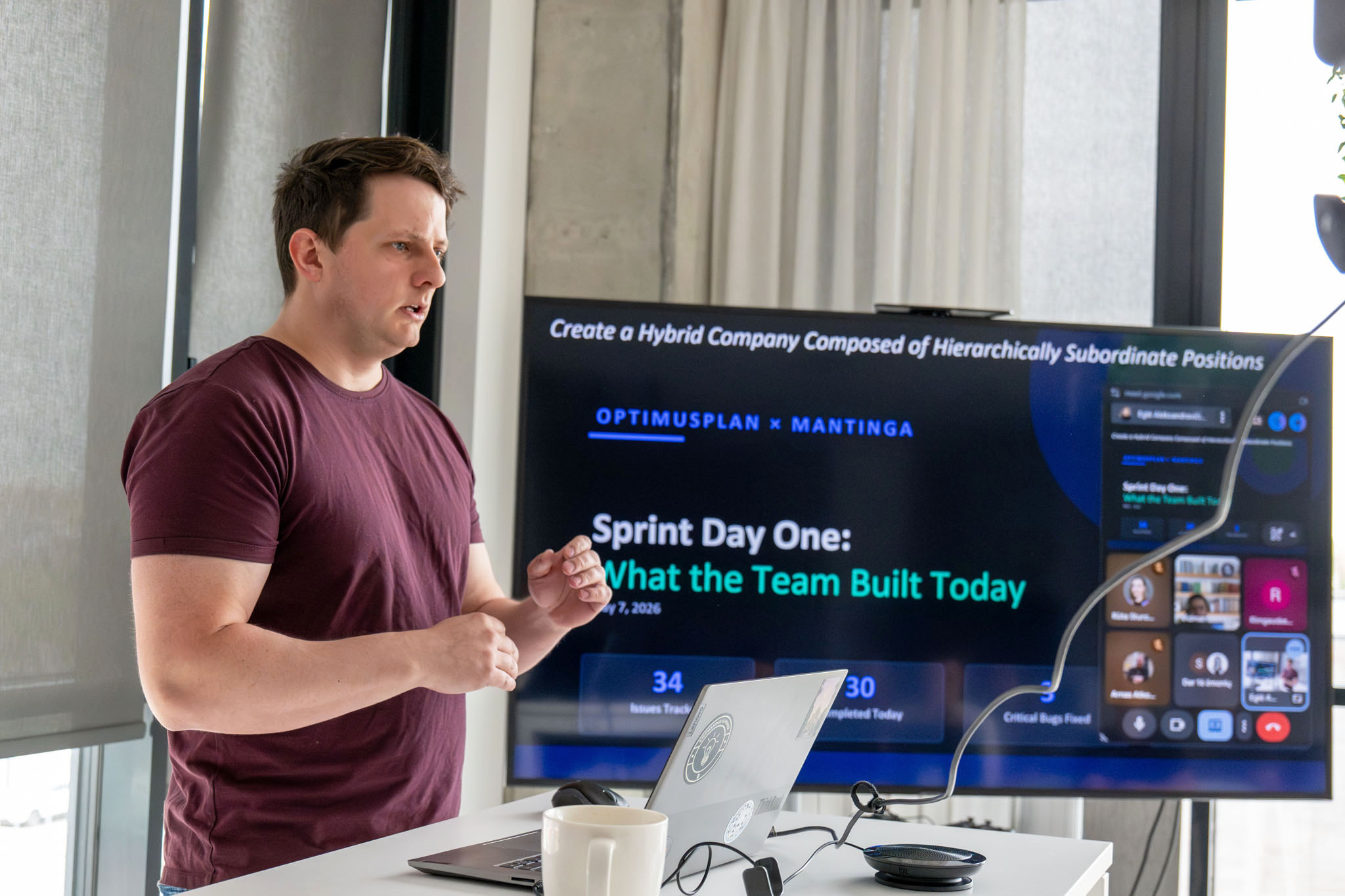
The most conceptual project of the day: a hybrid “company” made up of AI agents assigned to different roles and positions in a hierarchical structure. The experiment explored whether a team of specialised agents could coordinate, delegate, and collectively manage a defined set of company functions – an early, honest look at what agentic AI actually does well and where it falls apart.
And the winner is…
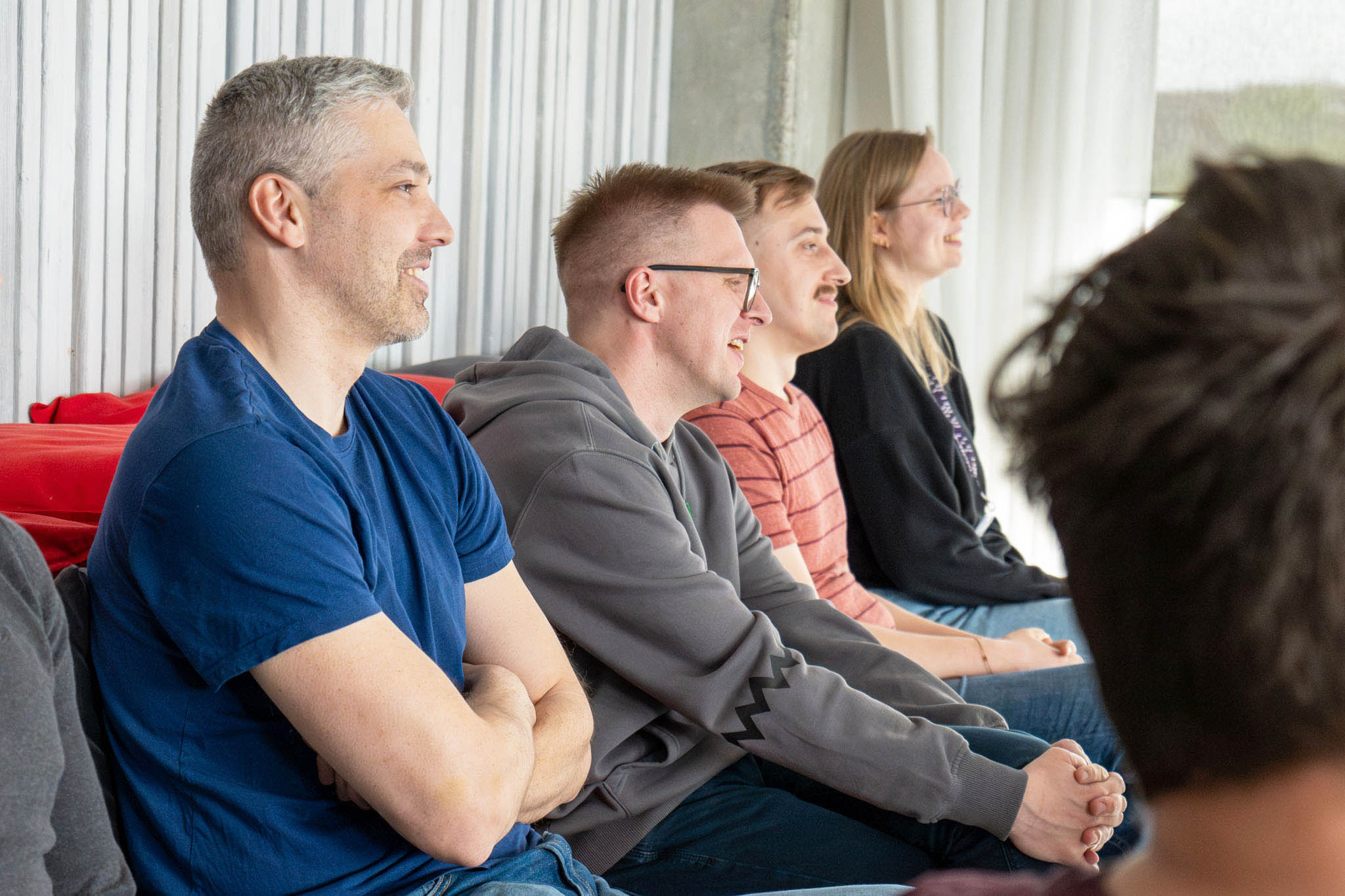
After a full day of building, every team took the stage and presented to the full company. Then everyone voted.
What the day was really about
The hackathon was not about shipping polished products in eight hours. It was about giving the team space to think differently – to look at their own work and ask what’s getting in the way, and whether they could fix it.
What came back was a broad and honest mix: practical tools for real daily friction, a legacy system that finally got the modernisation it needed, and a few genuinely experimental ideas that pushed into new territory. That felt like the right outcome.
A big thank you to everyone who participated. Seven teams, a full day of building, seven presentations, and a lot of conversations that will not stop at the hackathon. Some of these ideas will find their way into real use. Some already have.
We will do it again.