Across Europe, retailers are losing billions to theft every year – and the numbers keep climbing. With food prices still elevated and organized crime groups systematically targeting stores, a growing number of retailers are turning to AI-powered computer vision to close the gap where conventional security falls short.
The scale of the problem
Retail theft has been climbing for years, but the latest figures make the scale impossible to ignore. As reported by French daily Le Monde, self-checkout systems became prime targets across European grocery retail – lanes designed for speed and convenience created a structural gap that traditional staffing models could not close. High-risk products like steaks and premium seafood began appearing in anti-theft containers with electronic trackers in stores across France, Germany, the UK, and Greece.
According to Eurostat’s July 2026 flash estimate, Lithuania recorded the highest headline inflation in the eurozone at 5.6% – a signal that elevated living costs are still feeding theft incentives across the Baltic region and beyond.
Sources: ONS via Crest Advisory • British Retail Consortium 2025 • EHI via Tagesschau • HDE via Berlin Herald • Checkpoint Systems via 52spain • Connexion France
Despite these figures, many retailers remain reluctant to disclose the full scale of their losses. That opacity is part of what makes AI and data analytics so valuable – they surface patterns that manual reporting misses, and operate continuously in environments like self-checkout zones where human oversight is sparse.
“Theft issues are becoming the main topic in the retail industry”
Evaldas Budvilaitis, Chairman of the Board at ScanWatch – a company developing AI-driven security systems for self-checkout tills – has been tracking this shift closely. Speaking to Le Monde, Budvilaitis emphasized that machine learning and computer vision are becoming essential tools for identifying suspicious behavior at checkout, reducing shrinkage without creating a friction-heavy experience for honest shoppers.

The context makes the urgency clear. Self-checkout adoption grew rapidly across European grocery retail over the past decade, and the unintended consequence is a structural vulnerability: lanes that are fast and convenient for customers are also harder to monitor with traditional staffing models.
How computer vision addresses self-checkout theft
Traditional loss prevention at self-checkout relies on weight sensors, random audits, and staff spot-checks. These work up to a point, but they generate high false-alarm rates, slow down checkout flow, and cannot distinguish between a genuine scanning error and deliberate theft.
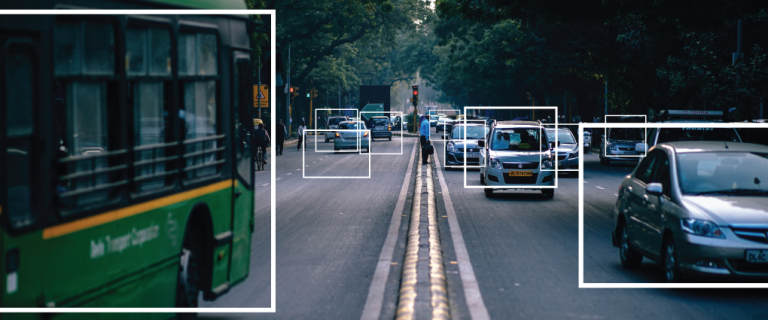
Computer vision systems approach the problem differently. Cameras positioned at checkout lanes analyze each transaction frame by frame, cross-referencing what is physically moved against what is scanned. Behavioral signals – items placed in bags before scanning, obstructed barcodes, unusual movement sequences – are flagged in real time rather than caught on a post-hoc CCTV review.
The practical outcome is a system that can flag a genuine suspicious event without halting the checkout flow entirely – preserving customer experience while maintaining a deterrent.
Sources: Business Research Company (market size, 23.5% CAGR) • Intel Market Research (deployment share) • National Retail Federation / LPRC 2025
What AI does well – and where it has limits
Computer vision is well-suited to pattern detection at scale: flagging anomalies across dozens of simultaneous checkout lanes, operating consistently regardless of staffing shifts, and generating structured data that makes loss trends visible in ways that manual logs cannot.
What AI does well
Monitors dozens of lanes simultaneously without fatigue
Flags suspicious behavior in real time, not on post-hoc review
Generates structured loss data that manual logs cannot produce
Operates consistently across shift changes and peak hours
Honest limitations
Accuracy depends on lighting quality, camera angle, and training data variety
Organized crime groups require tactics beyond checkout-lane vision alone
False positives, if unmanaged, create friction and customer service issues
Works best as one layer of a broader strategy, not a standalone fix
This is why the most effective implementations combine computer vision with inventory analytics, staff protocols, and physical security measures – rather than treating AI as a replacement for the full loss-prevention stack.
The business case is becoming unavoidable
UK retailers spent a record £1.8 billion on crime prevention in a single year – and theft still rose. Germany’s retailers have posted four consecutive record-loss years, reaching €4.33 billion in 2025. The reactive model of adding more staff and more cameras is not moving the needle.
For retail operators already running tight margins, AI-based loss prevention is shifting from an optional technology investment to a core operational decision – not because the technology is perfect, but because the alternative trajectory is measurably worse.
The computer vision market for retail is projected to grow from $4.23 billion in 2025 to $12.19 billion by 2030 at a 23.5% CAGR. The tooling has matured considerably. The remaining question for most retailers is not whether AI can help with loss prevention, but how to implement it accurately enough, fast enough, and at scale across a store estate.