Digital transformation was supposed to be the finish line. Companies spent years digitizing processes, migrating to the cloud, and building data infrastructure. Many succeeded. Yet the promised competitive advantage proved temporary – because everyone else was doing the same thing.
Now a new shift is underway. Organizations that mastered digital are discovering it was preparation, not destination. The real opportunity lies in what comes next: intelligent transformation.
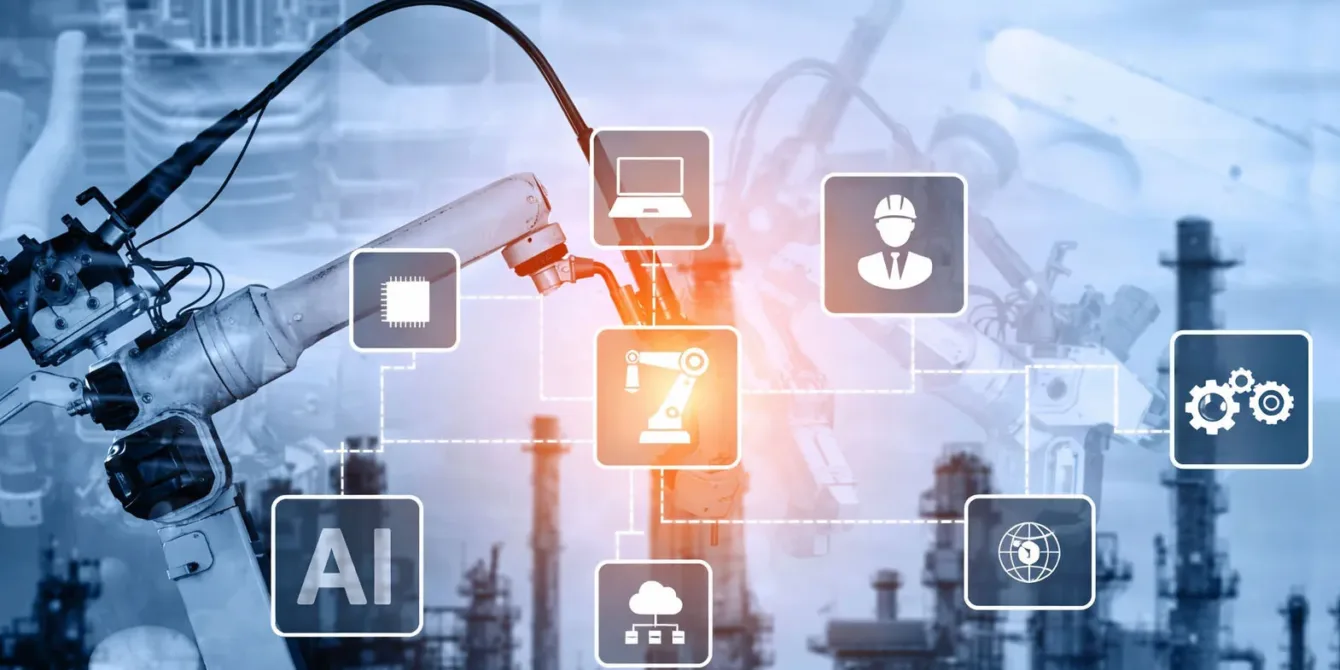
Intelligent transformation is the strategic integration of artificial intelligence, machine learning, and advanced analytics into an organization’s core operations. Unlike digital transformation, which focused on converting analog processes to digital ones, intelligent transformation creates systems that can sense, learn, predict, and adapt autonomously.
The difference matters. A digitally transformed company might use software to track inventory. An intelligently transformed company uses AI that predicts demand, adjusts orders automatically, and learns from every forecast error to improve future accuracy. One follows rules. The other continuously improves.
For organizations wondering whether this applies to them: it does. Intelligent transformation is reshaping manufacturing floors, healthcare facilities, retail operations, and logistics networks. The question is not whether your industry will be affected, but whether you will lead the change or react to it.
From Digital to Intelligent: Understanding the Evolution
To understand intelligent transformation, it helps to see where it fits in the broader evolution of how businesses operate.
Digitization came first – converting paper records to digital files, moving from physical to electronic. Important, but fundamentally about storage and access.
Digital transformation went deeper. It meant rethinking processes around digital capabilities: automating workflows, enabling remote collaboration, using data to inform decisions. Companies that achieved genuine digital maturity built integrated systems, connected data across departments, and developed cultures comfortable with technology-driven change. The path to genuine digital maturity follows four distinct stages – from manual processes to AI-ready operations. Understanding these digital maturity stages is the foundation any organization needs before pursuing intelligent transformation.
Intelligent transformation represents the next evolution. It takes the digital foundation and adds a layer of intelligence – systems that do not just execute predefined rules but learn from data, recognize patterns, make predictions, and improve over time without constant human intervention.
Think of it this way: digital transformation gave organizations eyes and ears. Intelligent transformation gives them a brain.
This progression is not optional. Research consistently shows that companies integrating AI into their transformation efforts outperform those pursuing digitization alone. The gap between leaders and laggards is widening, and it is widening faster than most executives realize.
What Makes Transformation “Intelligent”
Several capabilities distinguish intelligent transformation from its predecessors.
Predictive rather than reactive operations. Traditional systems report what happened. Intelligent systems forecast what will happen – equipment failures before they occur, demand spikes before they materialize, quality issues before defective products leave the line. This shift from historical reporting to predictive insight changes how organizations allocate resources and manage risk.
Continuous learning and adaptation. Digital systems require humans to update rules and parameters. Intelligent systems learn from outcomes and adjust automatically. A machine learning model that predicts customer churn does not just flag at-risk accounts – it refines its predictions based on which customers actually left, becoming more accurate with each cycle.
Automation of judgment, not just tasks. Digital automation handles repetitive, rule-based work. Intelligent automation handles tasks requiring perception and judgment: inspecting products for defects, analyzing medical images, interpreting natural language queries. These were previously considered uniquely human capabilities.
Personalization at scale. Intelligent systems can tailor products, services, and experiences to individual users without proportional increases in cost or complexity. What once required dedicated account managers can now be delivered automatically to thousands of customers simultaneously.
Decision support that improves human judgment. Rather than replacing human decision-makers, intelligent transformation often augments them – providing insights, recommendations, and early warnings that help people make better choices faster.
The Technologies Powering Intelligent Transformation
Intelligent transformation draws on a toolkit of interconnected technologies. Understanding these helps clarify what is possible and what is practical for different organizations.
Machine learning and deep learning form the analytical core. These techniques enable systems to identify patterns in data, make predictions, and improve accuracy over time. Applications range from demand forecasting to fraud detection to predictive maintenance.
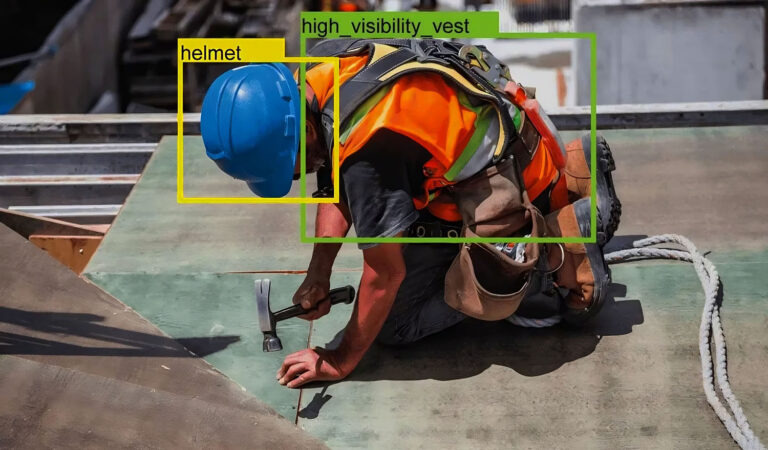
Computer vision allows machines to interpret visual information – images, video, physical environments. This technology drives quality inspection systems, medical image analysis, autonomous navigation, and real-time monitoring of physical processes. For organizations with visual data – which includes most manufacturing, healthcare, retail, and logistics operations – computer vision often delivers the most tangible early returns from AI investment.
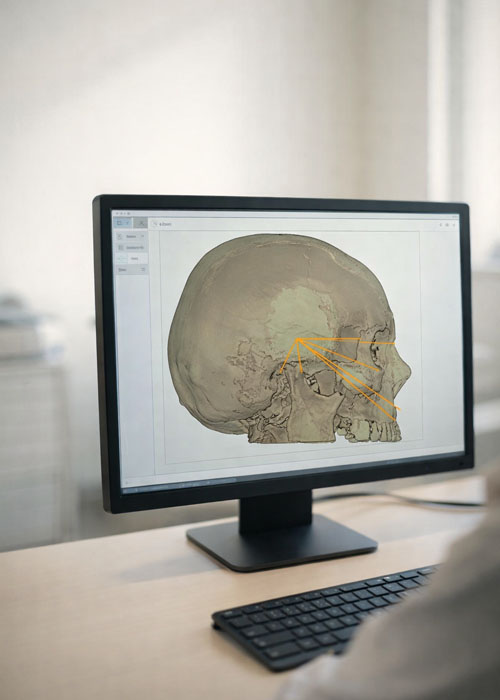

See how Agmis built an AI-powered pre-surgical planning solution for Europe's leading orthopedic implant manufacturer, automating 3D model reconstruction from CT scans with precision matching human specialists.
Natural language processing enables machines to understand and generate human language. Chatbots, document analysis, sentiment monitoring, and voice interfaces all rely on NLP capabilities. As these systems mature, they increasingly handle complex communication tasks that previously required human interpretation.
Internet of Things and sensor networks generate the real-time data that intelligent systems require. Connected devices on factory floors, in logistics networks, embedded in products – these create continuous streams of operational information that AI can analyze and act upon.
Edge computing processes data closer to its source, reducing latency for applications requiring real-time response. A quality inspection system on a production line cannot wait for data to travel to a distant cloud server and back – it needs immediate analysis and feedback.
Robotic process automation combined with AI creates intelligent automation – systems that handle not just routine tasks but exceptions and variations that previously required human judgment.
These technologies work together. A predictive maintenance system might combine IoT sensors (collecting equipment data), machine learning (predicting failures), and computer vision (analyzing visual indicators of wear) to deliver insights that no single technology could provide alone.
Assessing Readiness for Intelligent Transformation
Organizations eager to pursue intelligent transformation often underestimate the importance of foundations. AI cannot fix broken processes or extract insights from poor-quality data. Before launching ambitious initiatives, honest assessment matters.
Data readiness determines what is possible. AI systems require data that is accessible, accurate, and sufficiently comprehensive. Many organizations discover their data is siloed across departments, inconsistent in format, or simply incomplete. Addressing these gaps is unglamorous but essential work.
Digital maturity shapes what is practical. Organizations that have not yet achieved basic digital integration will struggle with AI implementation. Intelligent transformation builds on digital foundations – attempting to skip stages typically leads to expensive failures. Taking a digital maturity test can reveal gaps between current capabilities and what AI initiatives will require. Learn more about measuring digital maturity as the foundation for intelligent transformation.
Organizational readiness often proves more challenging than technical readiness. Intelligent transformation changes roles, workflows, and decision-making processes. Resistance from employees who feel threatened, lack of executive sponsorship, and cultural resistance to data-driven decisions have derailed more AI projects than technical failures.
Use case clarity separates successful implementations from expensive experiments. The question is not “how can we use AI?” but “which specific problems would AI solve better than our current approaches?” Starting with well-defined challenges that have measurable outcomes dramatically improves success rates.
Integration complexity deserves realistic assessment. AI solutions that cannot connect with existing systems deliver limited value. Understanding your current technology landscape – and its constraints – helps identify which AI applications are feasible and which would require broader infrastructure changes.
Where Intelligent Transformation Delivers Value
Intelligent transformation applies across industries, but certain domains show particularly strong results.
Manufacturing operations benefit from AI’s ability to process sensor data, visual information, and production metrics simultaneously. Predictive maintenance reduces downtime. Computer vision enables quality inspection that catches defects humans miss while operating at speeds manual inspection cannot match. Production scheduling algorithms optimize across multiple constraints that would overwhelm human planners.

See how Agmis deployed AI-powered defect detection for one of the world's largest automotive seat producers, using computer vision to identify wrinkles and surface imperfections in real-time.
Supply chain and logistics gain from AI’s forecasting and optimization capabilities. Demand prediction models reduce inventory costs while improving availability. Route optimization adapts to real-time conditions. Warehouse operations become more efficient through intelligent task allocation and automated systems.
Healthcare sees intelligent transformation in diagnostics, treatment planning, and operational efficiency. AI analyzes medical images with consistency human specialists cannot maintain across high volumes. Administrative processes that consumed clinical staff time can be automated. Patient monitoring systems detect early warning signs that might otherwise be missed.
Customer experience improves through personalization and responsiveness. AI enables organizations to tailor interactions based on individual behavior and preferences. Support systems resolve common issues automatically while routing complex problems to appropriate human agents. Sentiment analysis provides early warning of customer dissatisfaction.
Finance and risk management leverage AI for pattern recognition at scale. Fraud detection systems identify suspicious transactions among millions of legitimate ones. Credit decisions incorporate more variables with greater consistency. Forecasting models improve capital allocation.
The common thread: intelligent transformation delivers greatest value where decisions must be made quickly, at scale, with incomplete information, or across more variables than humans can practically consider.
The Implementation Reality
Theory and practice diverge significantly in intelligent transformation. Understanding common challenges helps organizations avoid them.
Pilot purgatory traps many organizations. They successfully demonstrate AI in limited trials but cannot scale results across the enterprise. Moving from proof-of-concept to production requires different capabilities – robust data pipelines, integration with operational systems, change management, ongoing model maintenance. Many organizations underinvest in these unglamorous necessities.
Data quality problems surface during implementation rather than planning. Models trained on sample data perform differently when exposed to real-world messiness – missing values, inconsistent formats, edge cases the training data did not include. Successful implementations budget significant time for data preparation and cleaning.
Integration challenges multiply complexity. An AI model that operates in isolation delivers limited value. Connecting predictions and recommendations to operational systems – ERP, production control, customer platforms – requires integration work that often exceeds the effort of developing the AI itself.
Change management determines whether technically successful implementations deliver business value. Employees who do not trust AI recommendations will find workarounds. Managers who do not understand model outputs will ignore them. Building organizational capability to work with intelligent systems matters as much as building the systems themselves.
Governance and ethics require attention from the start. AI systems that make consequential decisions need oversight mechanisms, explainability where required, and safeguards against bias. Retrofitting governance after deployment proves far more difficult than building it in.
Getting Started: A Practical Path Forward
Organizations ready to pursue intelligent transformation benefit from a structured approach.
Begin with assessment. Understand your current digital maturity, data readiness, and organizational capacity for change. Identify gaps that would prevent AI initiatives from succeeding. Be honest – overestimating readiness leads to failed projects and organizational skepticism that makes future efforts harder.
Select focused use cases. Choose initial projects with clear business problems, available data, measurable outcomes, and reasonable complexity. Early wins build credibility and organizational learning. Ambitious moonshots can come later, after foundational capabilities are established.
Build partnerships strategically. Few organizations have all the expertise intelligent transformation requires in-house. Domain knowledge, AI development skills, integration experience, and change management capabilities may need to come from different sources. Select partners based on relevant experience – generic technology providers often struggle with industry-specific challenges.
Plan for iteration. AI implementations improve over time as models learn and organizations adapt. Initial deployments rarely achieve full potential. Build feedback mechanisms and continuous improvement processes from the start rather than treating go-live as the finish line.
Invest in people alongside technology. The organizations seeing greatest returns from intelligent transformation are developing internal capabilities, not just purchasing solutions. Training existing employees, hiring strategically, and building cultures comfortable with AI-augmented work determines long-term success.
What Comes Next
Intelligent transformation is accelerating. Advances in AI capabilities, declining implementation costs, and growing competitive pressure are compressing timelines. Organizations that delay risk finding themselves permanently behind better-equipped competitors.
Yet intelligent transformation is not primarily about technology. It is about building organizations that can sense changing conditions, learn from experience, predict future challenges, and adapt faster than competitors. The technology enables these capabilities, but realizing them requires strategic vision, organizational commitment, and practical execution.
The companies leading this shift understand something important: intelligent transformation is not a project with an end date. It is a capability that, once developed, continues generating value as AI advances and opportunities expand. The foundation built today determines what becomes possible tomorrow.
For organizations ready to move beyond digital transformation, the path forward is clear – if demanding. Assess honestly, start focused, build capabilities, and iterate relentlessly. The gap between leaders and laggards will only widen from here.