Digital transformation in logistics isn’t about adopting technology for its own sake – it’s about eliminating the operational friction that erodes margins and slows growth. But knowing which technology to adopt requires understanding where your organization actually stands. Digital maturity – whether your business is ready for transformation or falling behind determines which solutions will genuinely move the needle versus which ones will become expensive shelfware.
For freight executives managing cross-border operations, that friction often hides in plain sight: scattered driver tools, manual documentation processes, and communication systems held together by phone calls and workarounds. These aren’t minor inconveniences. They’re systemic barriers that prevent companies from scaling efficiently and competing in an increasingly demanding market.
With Europe’s fleet management market projected to reach ~ €13.42B by 2031 (converted from USD) – growing at 11.78% annually – the pressure to modernize is intensifying. The companies pulling ahead aren’t just digitizing existing processes. They’re rethinking how their drivers interact with the entire operation.
What’s Blocking Digital Transformation in Fleet Operations
Across the freight industry, the same patterns emerge. Drivers juggle disconnected systems – one app for navigation, another for messaging, spreadsheets or email for documentation. Dispatchers spend their days on reactive phone calls instead of strategic planning. Transport managers piece together fleet data from multiple dashboards that never quite align.
The costs are significant but often invisible:
Fragmented communication creates delays. When route changes travel through phone calls, messaging apps, and radio, information gets lost. Updates arrive late – or not at all. Drivers make decisions based on outdated instructions.
Document handling slows down deliveries. Only 24% of European freight companies have fully digitized their document processes. The result? 57% of shipment delays tie directly to document errors. Every manual handoff is a failure point.
Connectivity gaps disrupt operations. International routes pass through areas with poor or no cellular coverage. When navigation fails in remote regions, drivers lose time, fuel, and sometimes entire delivery windows. Fleets with integrated telematics report 25-35% fuel savings and up to 40% improvement in route optimization – but only when the system works everywhere.
Manual processes don’t scale. What works for 50 trucks becomes unmanageable at 500. Administrative overhead grows exponentially while visibility into real-time operations decreases.
The Shift Toward Unified Driver Systems
Leading freight companies are addressing these challenges by consolidating fragmented tools into a single logistics driver app – one platform that handles navigation, communication, documentation, and telematics in a unified interface.
This isn’t about adding another tool to the stack. It’s about replacing the stack entirely.
The core capabilities driving this shift include:
Offline-first navigation. Modern logistics driver apps built on mapping technologies like OpenStreetMaps provide full routing capabilities without connectivity. Drivers crossing rural areas or border regions maintain uninterrupted navigation regardless of signal strength.
Real-time route optimization. Integration with Transport Management Systems (TMS) creates a single source of truth. Driver apps work best when connected to a broader logistics management platform that coordinates orders, dock scheduling, and carrier workflows. When conditions change – traffic, weather, customer requests – updated assignments push to drivers automatically.
Instant document capture. Drivers photograph freight documents or delivery confirmations and share them instantly. No email threads, no lost paperwork, no customs delays from missing documentation.
Integrated communication. Built-in messaging replaces the patchwork of phone calls and external apps. Dispatchers and drivers communicate in real time with full conversation history preserved.
Centralized telematics. Vehicle data aggregates into unified dashboards, giving operations teams visibility into fleet performance without jumping between systems.
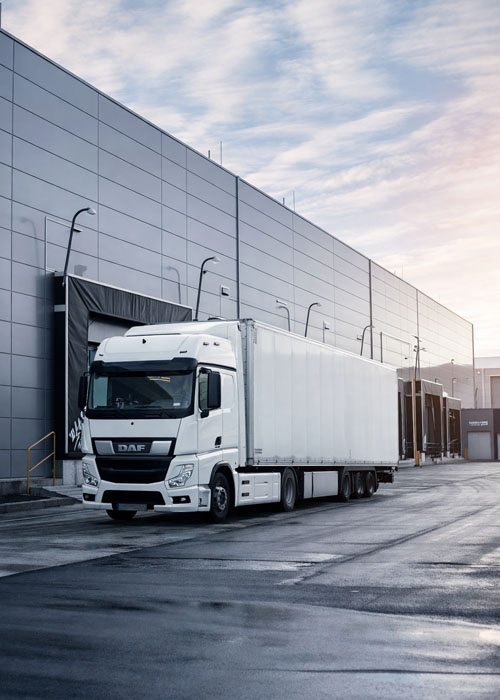
See how Agmis built a custom driver assistant platform for one of Europe's largest road freight companies, unifying navigation, messaging, and fleet telematics into one rugged tablet solution.
The ROI of Logistics Digital Transformation
For executives evaluating digital transformation initiatives, the business case is compelling.
Industry data shows that unified fleet management systems deliver 650-850% ROI within 18 months. Centralized data cuts overall operational costs by 10-15%. For mid-sized fleets, this translates to approximately €120,000 in annual savings.
Beyond direct cost reduction, the strategic benefits compound:
Driver productivity increases when administrative burden decreases. Every minute saved on documentation is a minute returned to core delivery operations. Compliance-related delays drop significantly when documentation flows digitally.
Delivery reliability improves when information travels in real time. Fewer missed windows. Fewer customer complaints. Stronger service level performance across the board.
Fleet visibility enables better decisions. When telematics data flows into a single system, patterns emerge. Operations teams identify inefficiencies, optimize routes dynamically, and predict maintenance needs before they become roadside emergencies. Fleets with centralized telematics report up to 55% reduction in unplanned maintenance costs.
IT maintenance simplifies dramatically. Over-the-air updates keep the entire fleet current without truck downtime or depot visits – critical for operations where every vehicle counts.
Driver retention improves when tools actually work. In an era of chronic driver shortages, a unified logistics driver app isn’t just a productivity tool – it’s a retention strategy. Lower frustration means lower turnover in a market where experienced drivers are expensive to replace.
Is Your Fleet Ready for Digital Transformation?
If you’re managing a growing fleet with cross-border operations, the question isn’t whether to pursue logistics digital transformation – it’s when. With road freight costs rising 13% in recent years due to fuel prices and driver shortages, operational efficiency has never been more critical to maintaining margins.
Consider these signals that your current approach may be limiting growth:
- Dispatchers spend more time on phone calls than strategic planning
- Document-related delays affect delivery windows regularly
- You lack real-time visibility into driver location and status
- Adding new trucks means adding proportionally more administrative overhead
- Driver complaints about fragmented tools are increasing
The freight industry is evolving rapidly. Companies investing in unified driver systems now are building operational advantages that will compound as competition intensifies and margins tighten.
Before investing in new systems, start by measuring your digital maturity. It tells you whether you’re ready for an integrated driver platform – and what foundations need to be in place first.
Agmis is a custom software development company specializing in logistics driver apps and fleet management solutions for freight companies navigating digital transformation. If you’re exploring how to unify your driver systems, contact our team to discuss your specific challenges.